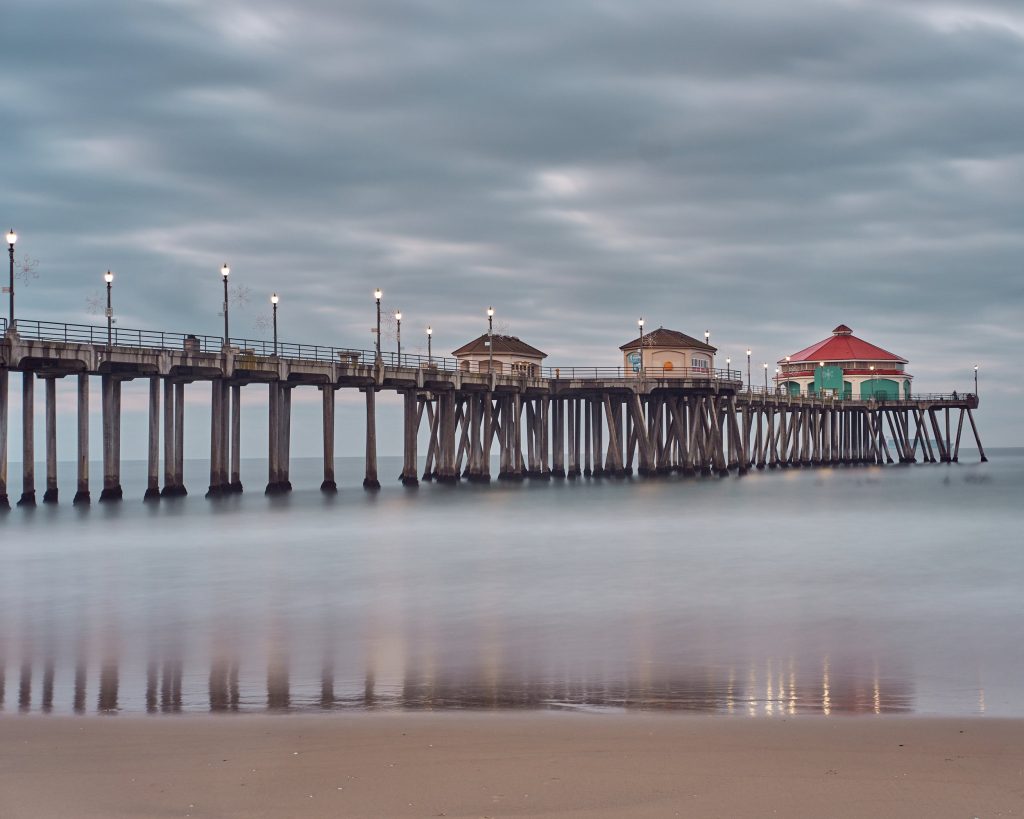
Southern California Landmarks – Part 2 Laguna Beach Pirate Tower
For a long time I kept seeing this narrow tower pop up in my feed every now and then.
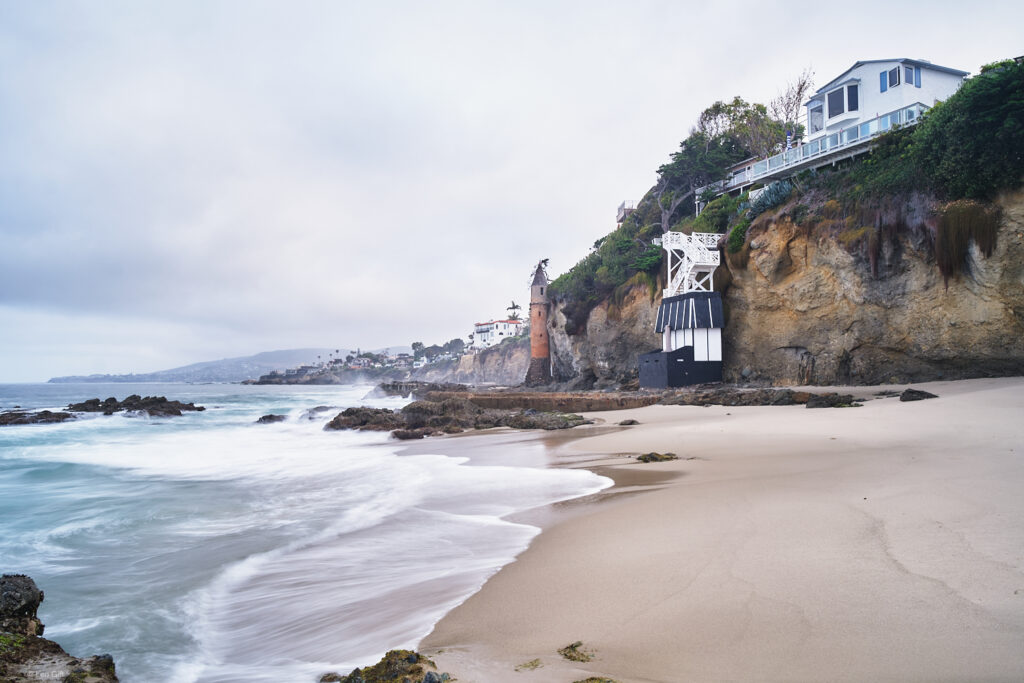
For a long time I kept seeing this narrow tower pop up in my feed every now and then. I finally made the trip a couple of years ago. It takes some commitment — it’s 45 minutes to an hour from Long Beach, and you have to time it right. I wanted to go in the morning, because the place is popular and the crowds in the evening are brutal.
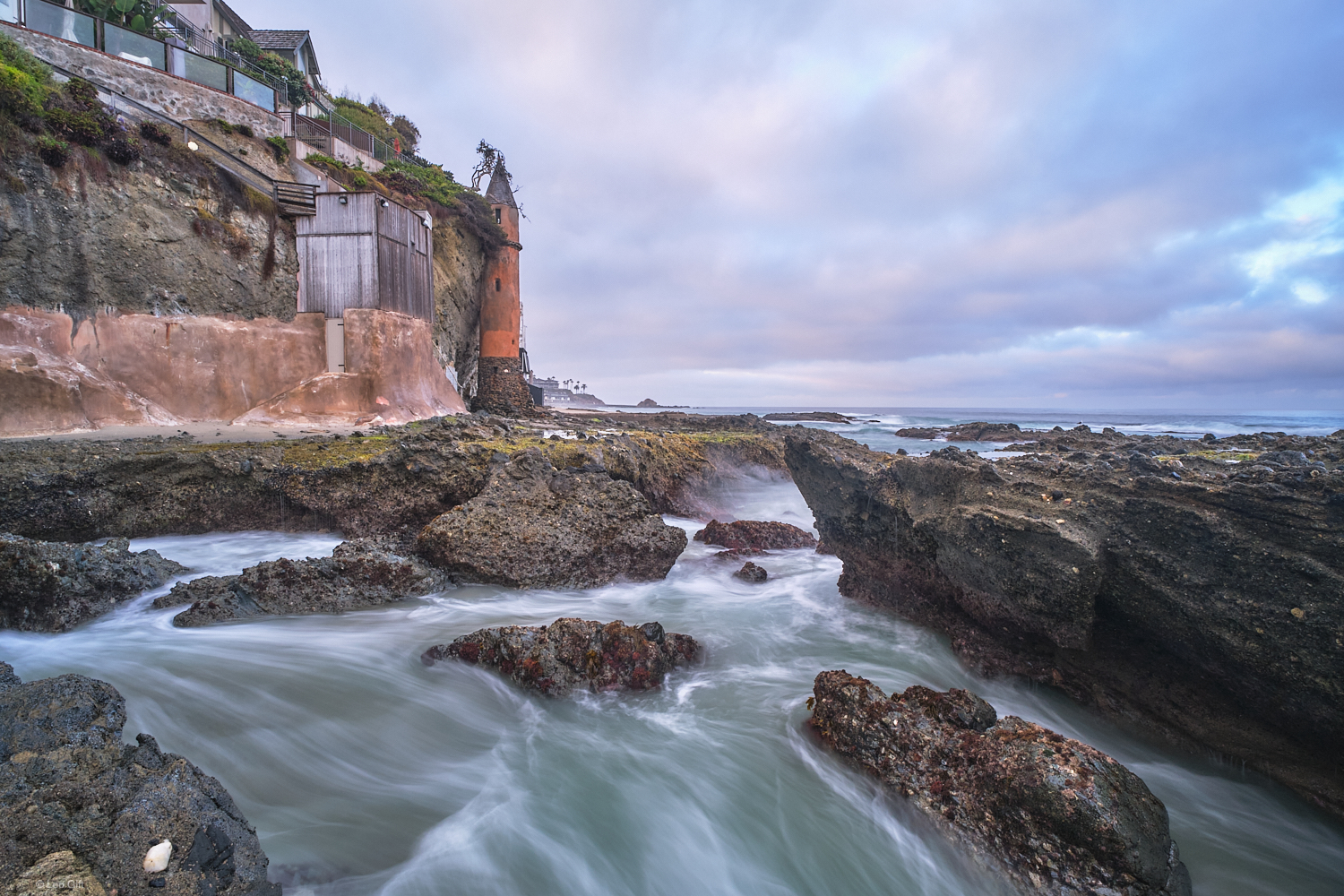
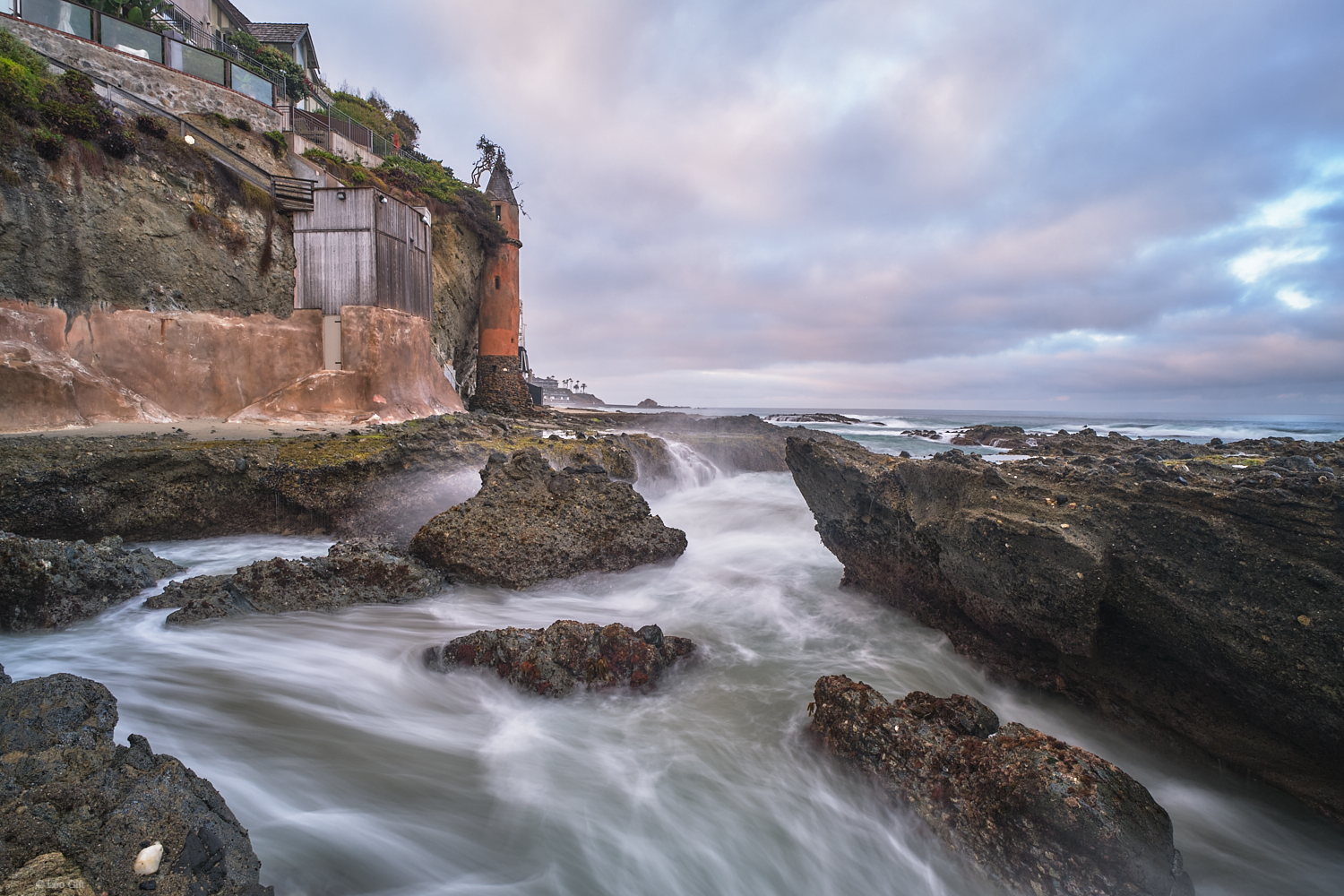
The tower sits on Victoria Beach in Laguna, and the first thing to know is that it’s only there when the tide lets you reach it. The rest of the time it’s an island, surrounded by water, and you stand on the cliff watching the waves crash against its base, wondering what you’re missing. That alone makes it different from every other landmark I’ve chased. You don’t just need the right light. You need the tide’s permission.
The first time I visited I timed it right and made it to the other side, but I didn’t come home with a single good frame. A couple of visits after that were high tide, and I ended up partially drenched for my trouble. Last month everything finally lined up — a free weekend and a low tide — so I made the drive.
Why This Strange Little Tower
It went up in 1926, and it has nothing to do with pirates. William E. Brown, a California state senator with a vacation house on the cliff above, wanted a private staircase down to the beach — so he built a sixty-foot tower to hold one, modeled on the castles he and his wife had seen on a trip to France. The thing looks like it was lifted out of some bleak movie: weathered stone, arched doorway, tall and narrow with a pointed roof. In reality it’s poured concrete on an ocean-stone foundation, dressed up to look ancient, which somehow makes it better. Someone went to that much trouble just to walk down to the water.
The pirate part came later, from the second owner. Harold Kendrick, a retired naval captain, used to dress up as a pirate and hide coins in the tower’s crevices for the neighborhood kids to find. What draws photographers is the contrast. A medieval-looking structure sitting on a Southern California beach, palm trees and bougainvillea overhead, temperamental SoCal weather, and an outcrop of rocks wrapped around the base.
Victoria Beach — The Approach
Getting there is half the battle. You park on the street in a residential neighborhood, where I get a hit of existential envy walking past the homes and the cars. Then you find the public beach access staircase and make your way down to the sand. The walk isn’t long, but it’s enough to make you commit. Going down is easy. Walking back up is the pain — be hydrated for that part.
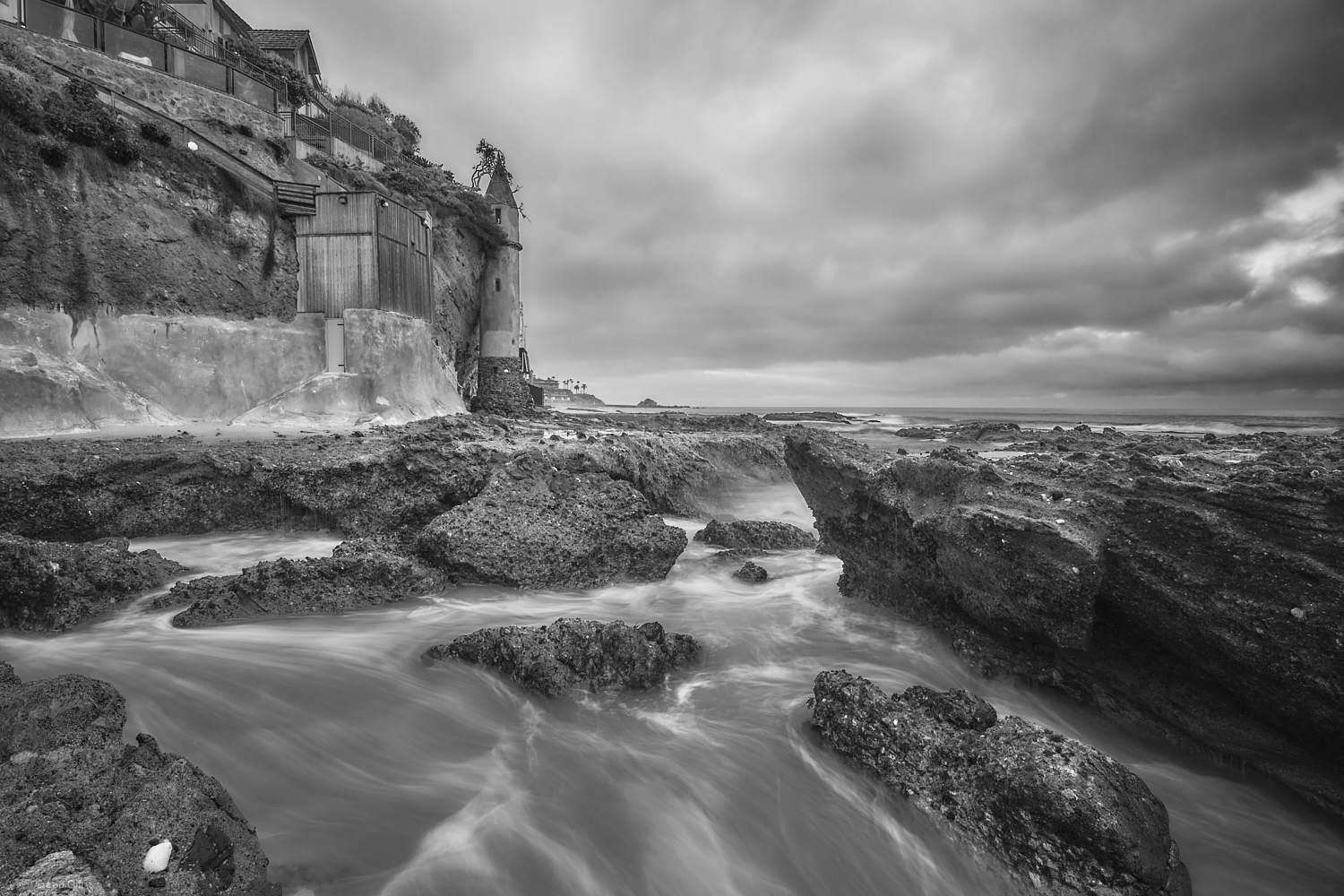
Once you’re on the beach you head south, and if the tide is low enough the tower appears around the bend like it was waiting for you. At low tide the approach is clean: walk right up, hop over some rocks, and cross to the other side. You have room to move, set up a tripod, and work different angles. At mid-tide you’re hugging the wall, timing your setups between wave sets and hoping your gear doesn’t get soaked. The last time I was out there I was standing on a rock shooting when the Pacific decided to reward me with a big set. Drenched from the hip down.
My Obsession With Long Exposure
When I started photographing, two people pulled me into this hobby: Peter McKinnon and Attilio Ruffo. Peter’s bucket shot was the one that lured me in, and Attilio’s videos got me into long exposure. I also blame him for the number of ND filters I’ve bought and trashed over the years. But jokes apart, there’s something genuinely relaxing about the whole process, and I love the otherworldly look it produces. Attilio doesn’t put out many videos nowadays, but another excellent resource is Garry Gough — he walks through the entire process, and his fine art images are worth the time on their own.
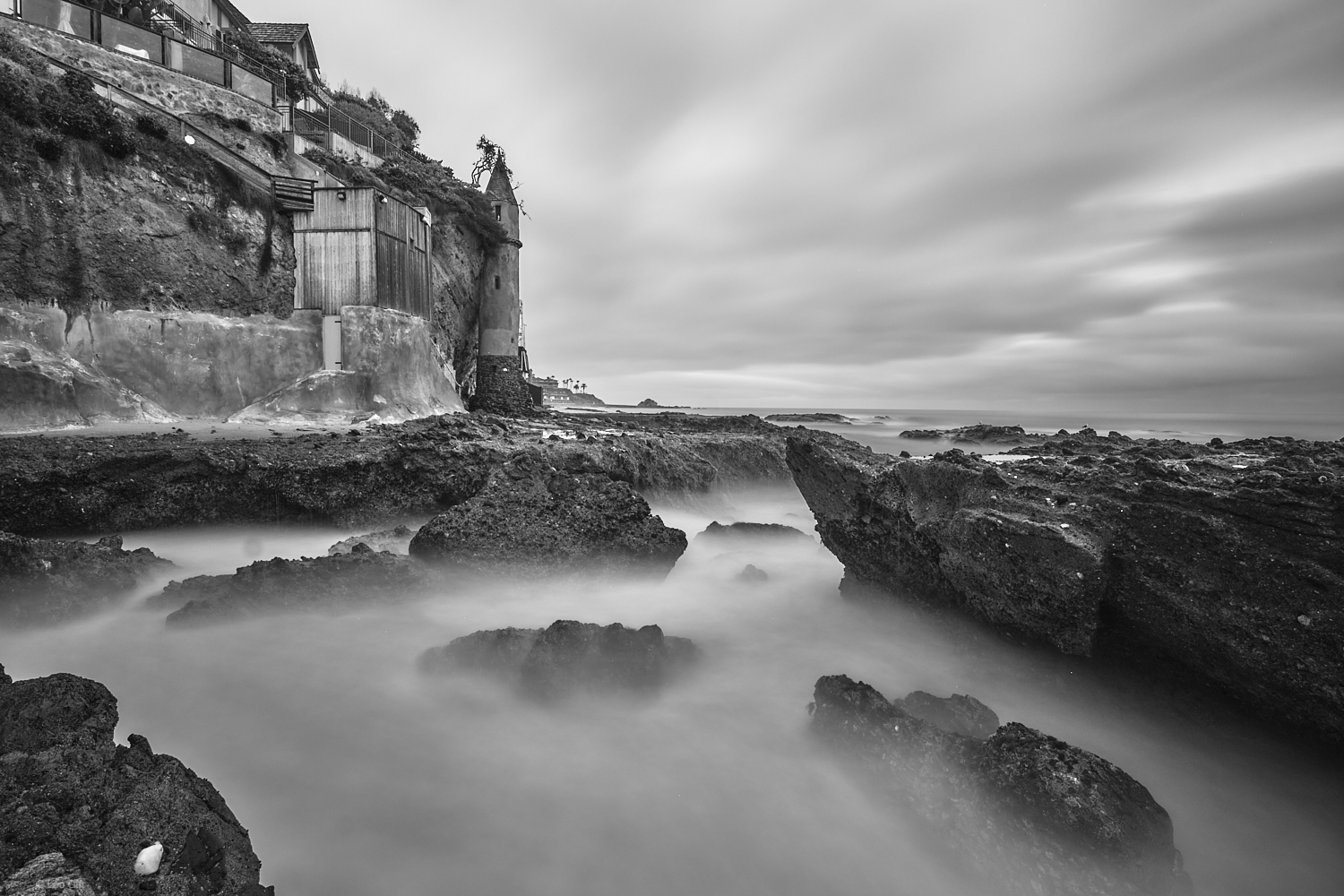
Long exposure is not what you use if you want to show a place as it is. It slows everything down until time seems to stand still. With a six- or ten-stop filter and an exposure of ten to thirty seconds, the surf turns into a soft, pale fog around the stone base. You can time it so the water goes completely to fog, or hold back and keep the streaks.
The Morning I Finally Went For It
I’d been watching the tide charts for weeks, waiting for a low tide that lined up with decent weekend light. I got there before dawn, and this time of year the sun comes up around 5:30, so getting down to the beach was no problem. It was the Sunday after the 4th of July and the beach was practically empty. I climbed the rocks to the tower, walked around to the far side, and set up on a rock facing it.
I put the tripod well back from the surf line, screwed on the six-stop ND, and composed wide to get the tower with some cliff and sky for scale, framed by the rocks. I shot different exposures as the tide came in and again as it receded. Once I had a few I was happy with, I went to the ten-stop and ran a two-minute exposure. The sky and the clouds weren’t what I wanted, but that’s SoCal June gloom for you, June through September.
For an introvert, mornings work better. No one around, and I can take my time and do whatever I want. There’s a quiet satisfaction afterwards, when I get home and edit. It’s not going to win any awards, but it’s my photo — and with my time in the US drawing to a close, I want my own experience of these places, not someone else’s. I’ve been lucky to live somewhere this beautiful, surrounded by some of the kindest people I’ve met.
Photo Gallery